- AWS
- Azure
- GCP
Outsource Your Platform Development to Entiovi and Build a Comprehensive Solution Tailored to Your Business Needs.
With AI-enabled capabilities increasingly shaping modern platforms, organizations are building systems that are more intelligent, adaptive, and data-driven.
At Entiovi, we understand that developing a robust and scalable software platform is crucial for your business to succeed in today's digital age. Our software platform development outsourcing services are designed to help you build a comprehensive platform that meets your specific business needs. Our team of experts will work closely with you to understand your business requirements and design a platform that is tailored to your specific needs.
With AI-driven development practices enhancing engineering efficiency and system intelligence, modern platforms are built to support evolving business demands.
We follow a rigorous development process that ensures the highest quality of code and delivers an exceptional user experience. Our platform development team is well-versed in the latest technologies and platforms, and we leverage this expertise to build robust and scalable software solutions that meet your business needs.
With AI-integrated cloud environments enabling scalable and intelligent infrastructure, platforms can dynamically adapt to changing workloads and data requirements.
Our platform development services include a range of technologies and frameworks, including Java, Node.js, React, Angular, and more. We also leverage cloud technologies such as Amazon Web Services (AWS), Microsoft Azure, and Google Cloud Platform (GCP) to provide a flexible, scalable, and cost-effective platform for your business.
Built modular. Built to last.
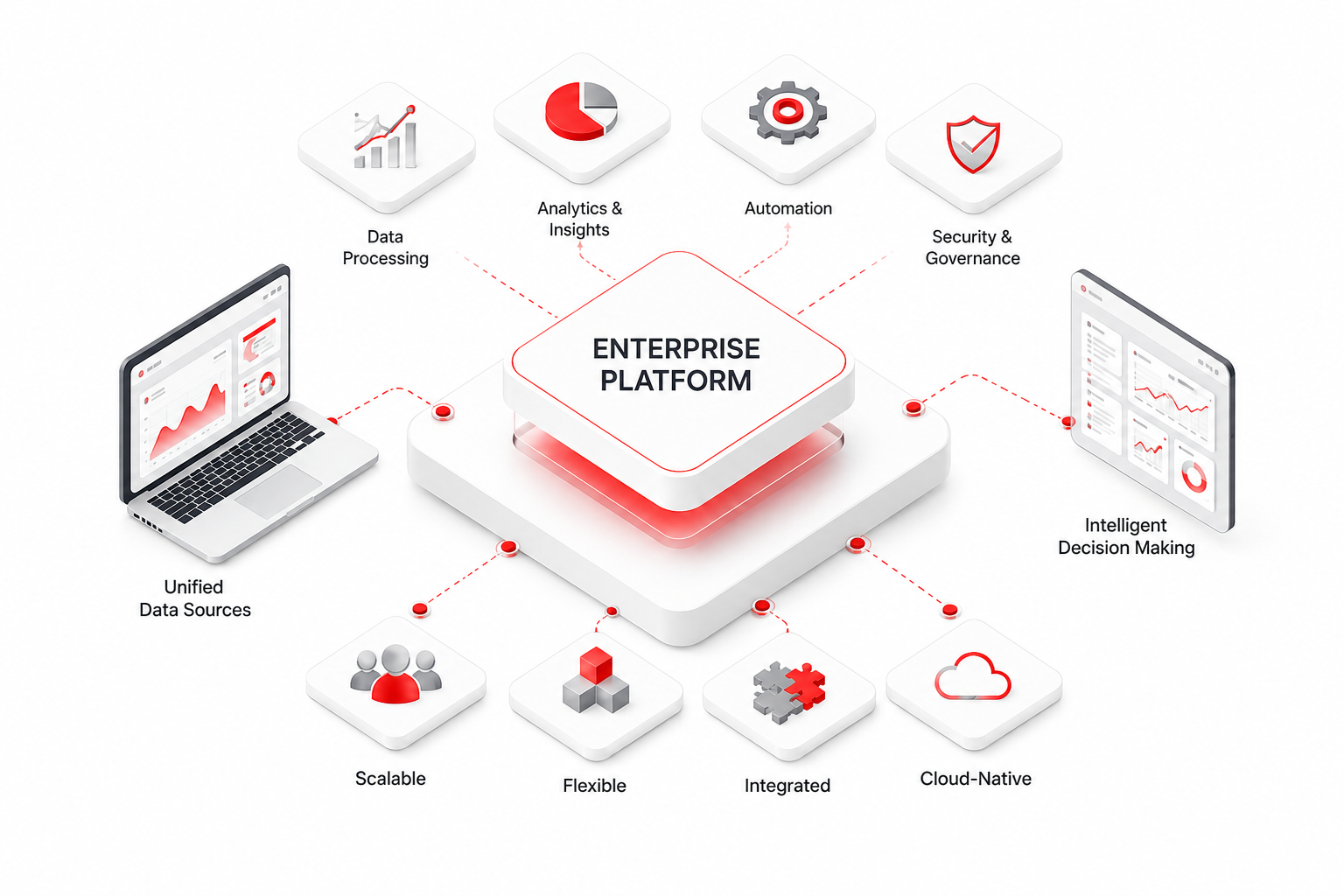
With AI-enabled architectural patterns supporting complex data flows and intelligent processing, enterprise platforms are increasingly designed for scalability, flexibility, and long-term evolution.
Enterprise platform architecture focuses on designing systems that can handle large-scale operations while remaining efficient and adaptable. By structuring platforms around modular and scalable components, organizations can ensure long-term performance and maintainability.
This approach also enables the integration of intelligent capabilities such as data processing, analytics, and automation, supporting more effective decision-making across the enterprise.
Distributed by design.
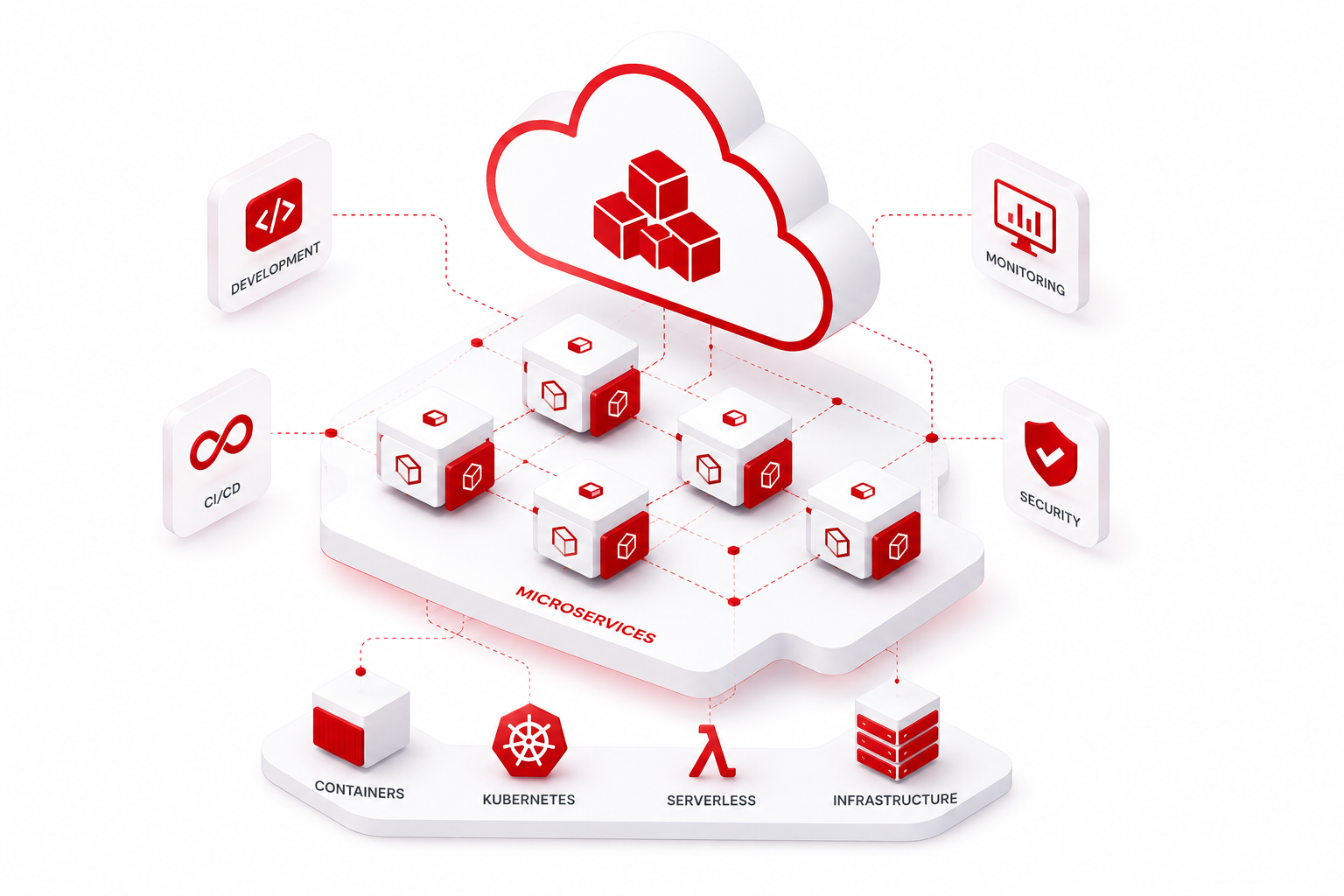
With AI-enhanced cloud-native systems enabling distributed intelligence and scalable services, modern platforms are designed to operate seamlessly across dynamic environments.
Cloud-native and microservices-based architectures allow applications to be broken down into smaller, independent components that can be developed, deployed, and scaled individually. This improves system flexibility, reliability, and speed of development.
Such architectures also make it easier to integrate intelligent services, automate workflows, and continuously enhance platform capabilities as business needs evolve.
Composable by default.
With AI-enabled integrations supporting intelligent data exchange and system interoperability, platforms are able to operate efficiently across diverse technology ecosystems.
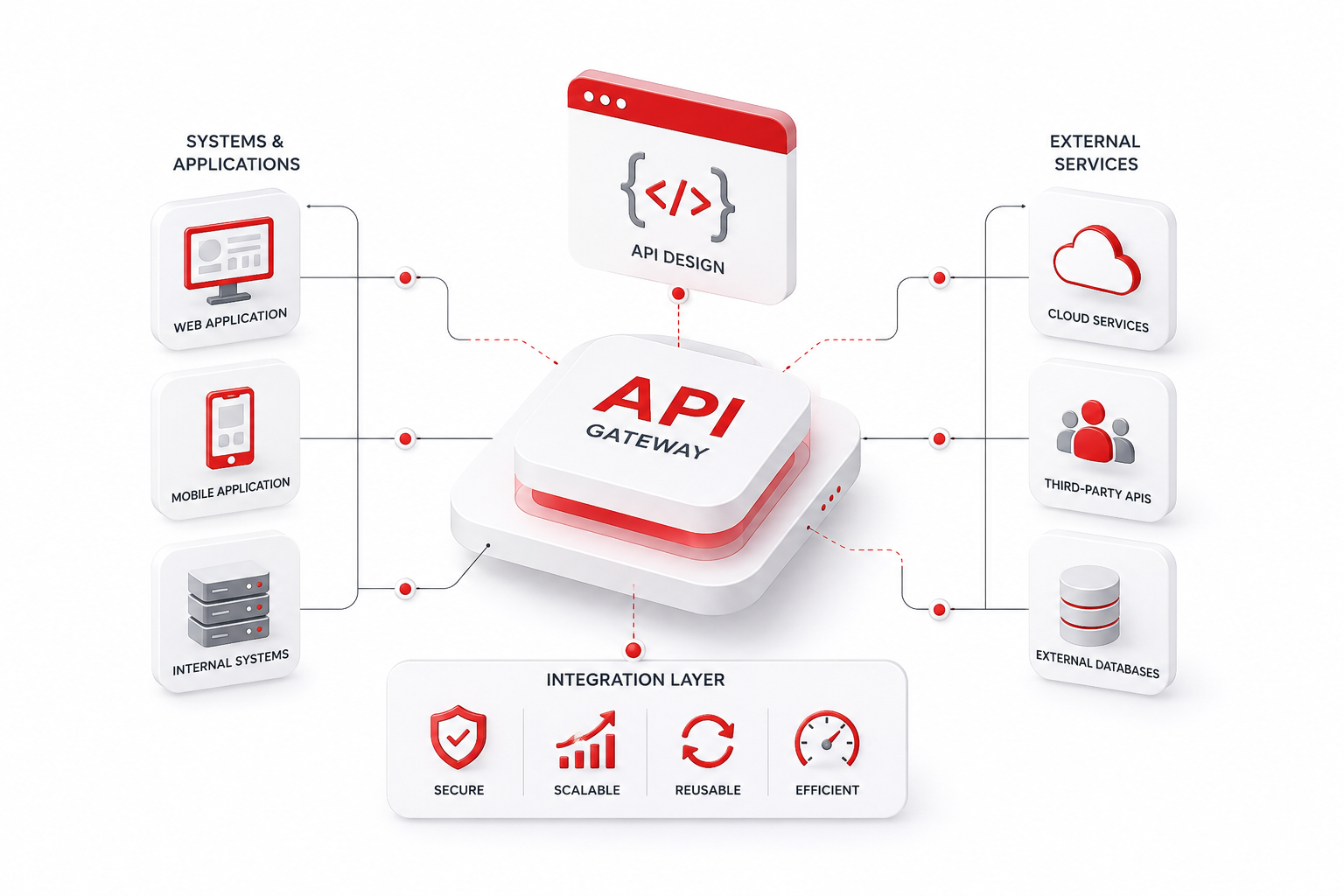
API design and integration play a critical role in connecting different systems, applications, and services. Well-designed APIs ensure secure, scalable, and efficient communication across platforms.
This enables organizations to integrate with third-party systems, legacy applications, and external services while maintaining a seamless flow of data and functionality.
Renew without rewriting.
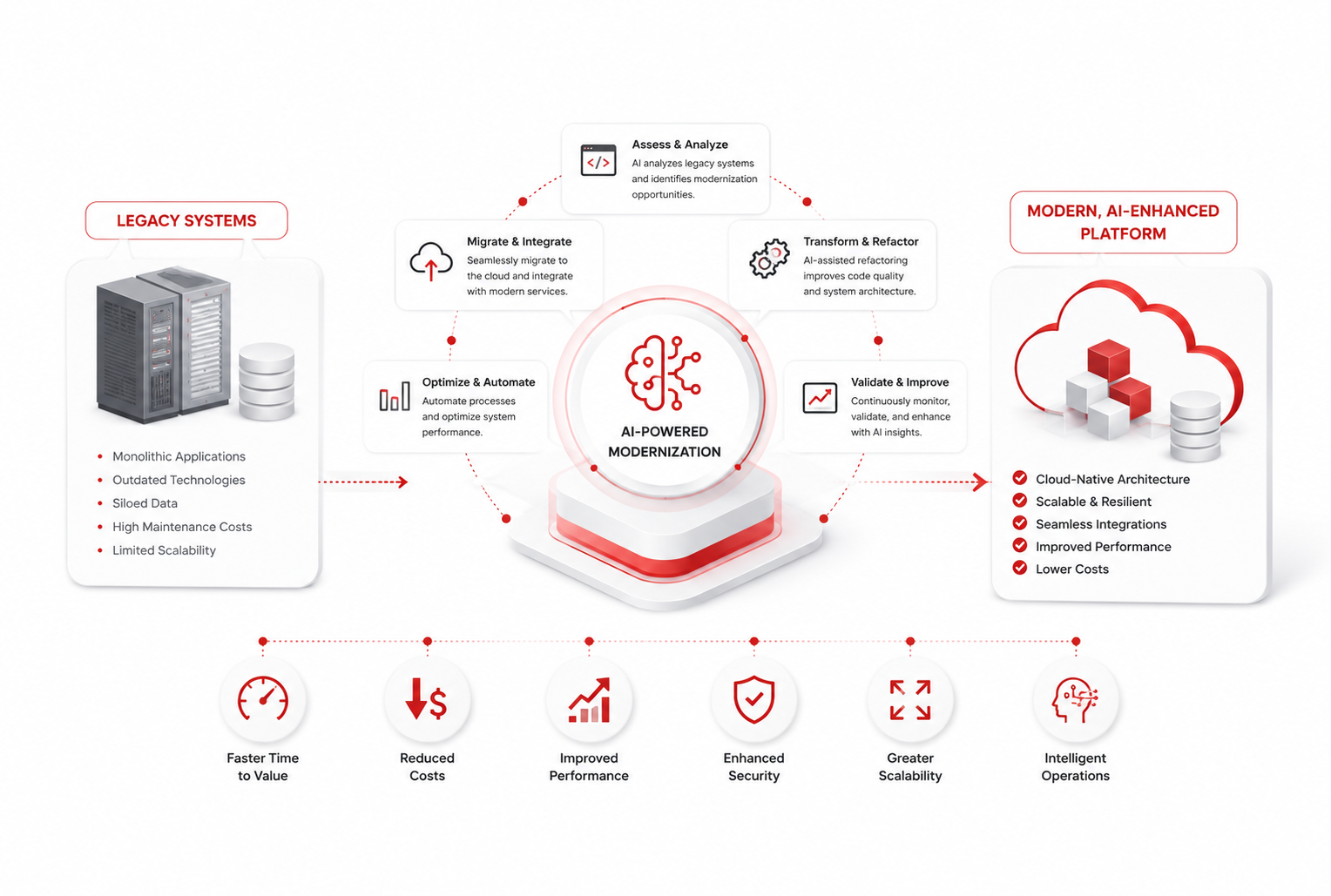
With AI-driven modernization approaches transforming traditional systems, organizations can upgrade legacy platforms to meet current and future business demands.
Legacy modernization involves upgrading existing systems using modern technologies while ensuring minimal disruption to operations. This includes migrating applications to the cloud, improving system integrations, and enhancing overall performance.
By incorporating intelligent capabilities such as automation and data processing, legacy platforms can be revitalized to support more efficient and scalable operations.
With AI-enabled development practices enhancing collaboration, adaptability, and delivery efficiency, organizations benefit from more responsive and scalable platform development.
In agile development, planning is done in short increments (e.g. sprints) rather than a long planning phase. This allows the team to adjust the platform's development based on feedback and changes in requirements.
Agile development emphasizes frequent integration and deployment of code to ensure that the platform is always in a deployable state.
Agile development is user-focused, with a goal of creating a platform that meets the needs of its users. The development team works closely with stakeholders to gather feedback and iterate on the platform's design.
Agile development emphasizes collaboration between team members with different skill sets. This helps ensure that the platform is developed holistically, with consideration given to both technical and user needs.
Agile development is an iterative process, with frequent feedback loops and testing. This allows the team to quickly iterate on the platform's design and functionality, making changes as needed.
Talk to an Entiovi platform engineering lead. We'll architect the right stack, the right cloud, and the right level of AI - for outcomes that scale with you.